A Thousand Years
The Story of Montmeilleur
Fortress, royal hunting residence, and the setting of a celebrated French novel — a thousand years above the valley of the Trièves.
Fortress, royal hunting residence, and the setting of a celebrated French novel — a thousand years above the valley of the Trièves.
Raised around the year 1000, when the Trièves formed a single seigneury of the Counts of Die, Montmeilleur was built for defence — a square keep set with four corner towers on a hilltop, commanding the glacial valley below. For more than four centuries it belonged to the Morges family, before passing through a succession of prominent houses of Grenoble and Marseille.
After the religious wars of the sixteenth century the fortress lost its military purpose. Moat, ramparts and drawbridge gave way to terraces, gardens and rose-clad towers, and the stronghold softened into what the French call a château de plaisance.
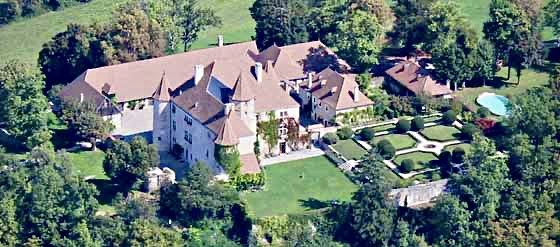
A square keep with four corner towers, built amid the feudal rivalries of the medieval Trièves.
While governing the Dauphiné as the young Dauphin, the future King Louis XI makes Montmeilleur his preferred hunting residence — before he is even crowned King of France.
After the religious wars the building is disarmed; terraces and gardens replace its defences.
Plundered during the Revolution and remodelled in 1875, the château keeps its medieval and renaissance silhouette.
Acquired and painstakingly restored over a decade by up to twenty-five local craftspeople, using walnut, hand-painted tile, lime paint and hemp.
The towers, gardens and forty-five hectares of organic land welcome a handful of guests at a time.

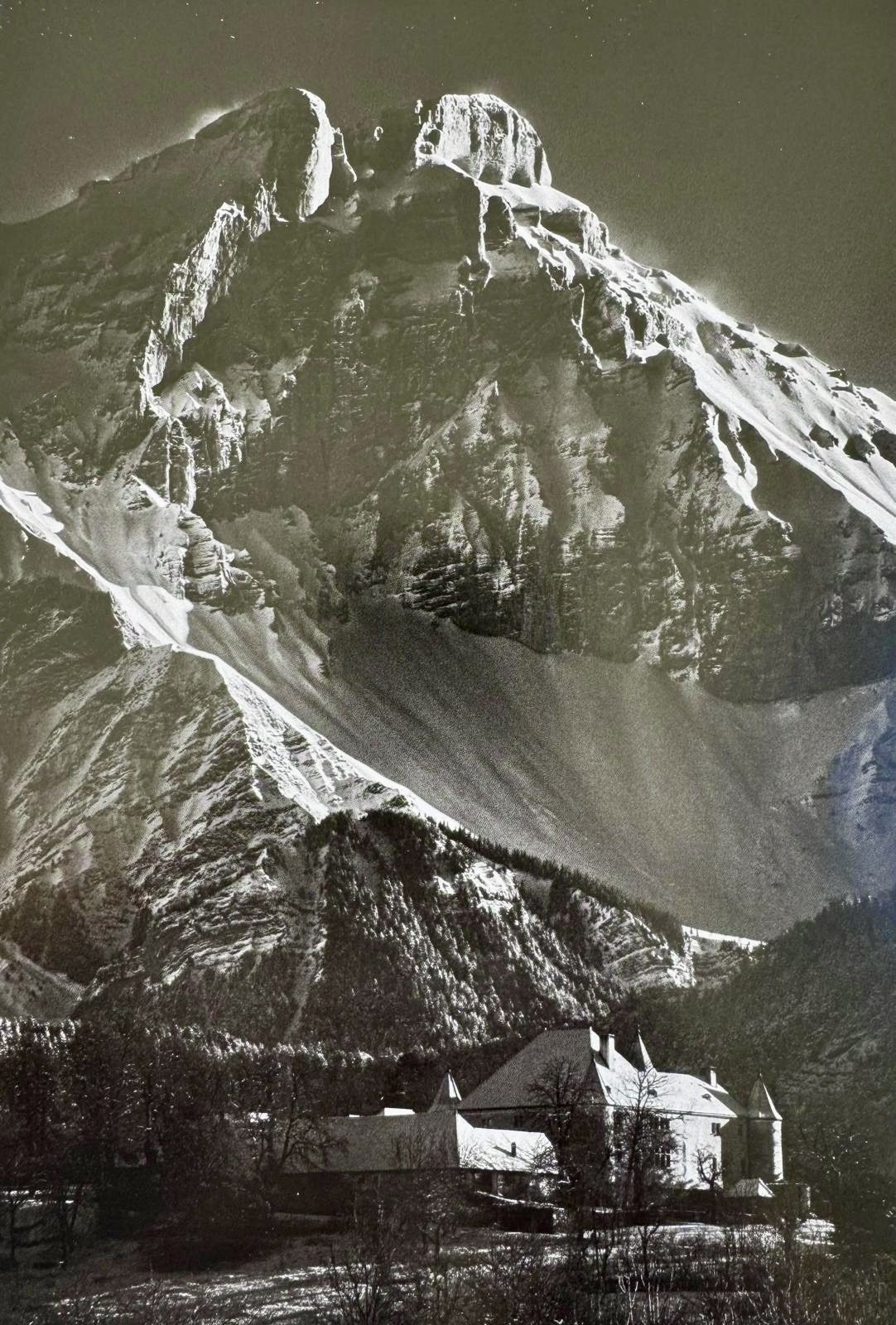
The novelist Jean Giono lodged at Montmeilleur and loved the Trièves above all other mountains — a valley he saw as a vast natural amphitheatre between the Vercors and the Dévoluy. He set his 1947 novel Un roi sans divertissement here, weaving the château into French letters.
“La maison désirée des montagnes.” Jean Giono, on the Trièves
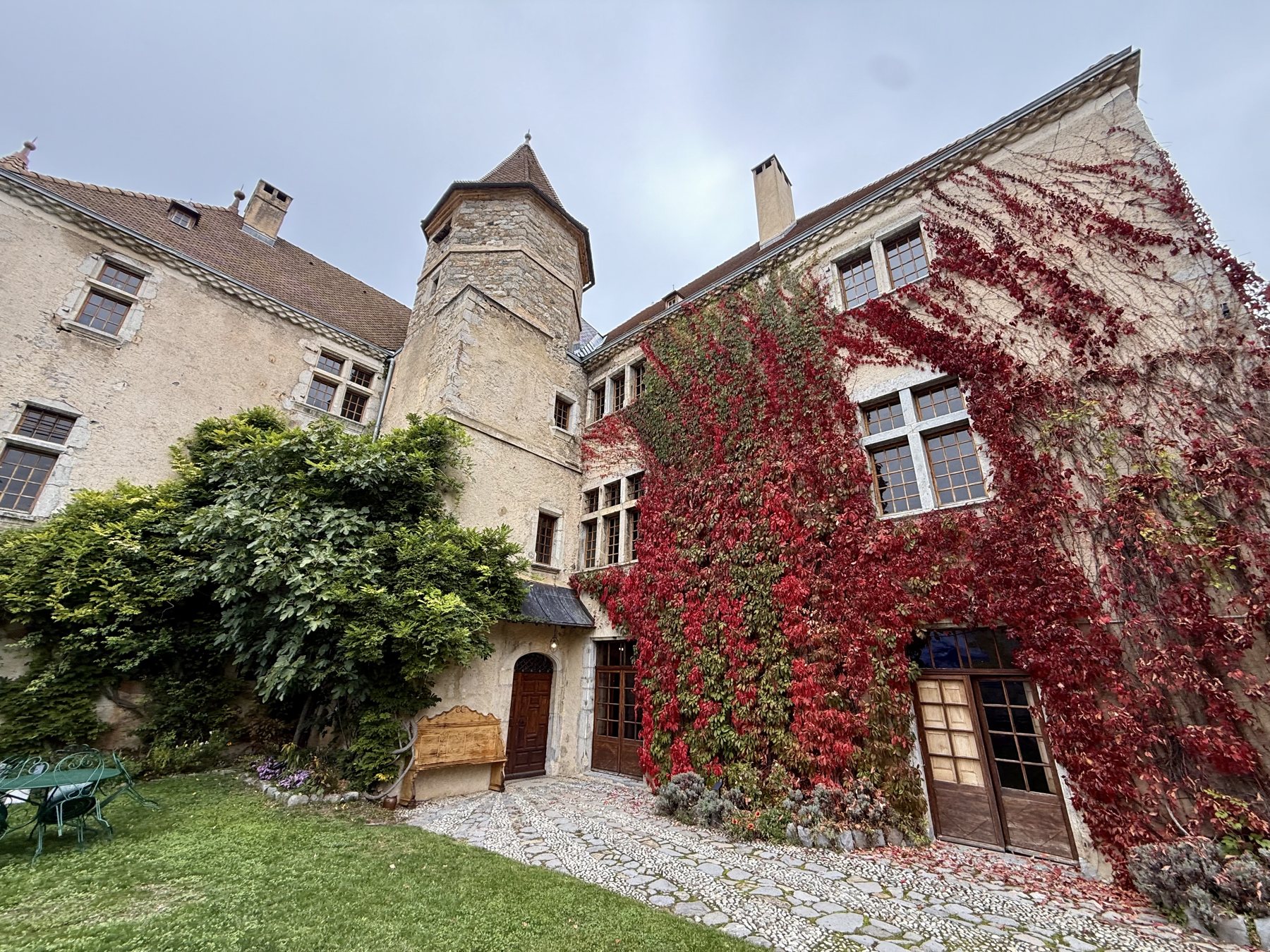
From the Cour des Paysans — the courtyard where villagers once sheltered with their animals — the château still wears its fortress face. On the garden side it softens entirely: carved renaissance windows and an octagonal tower overgrown with roses, wisteria and vine give Montmeilleur the look of a sleeping-beauty castle. Within, a walnut library and a spiral stair climb three floors.
Explore the Château